
A red, oozing hot spot can spread across a dog's skin in just a few hours. Fast action is the only way to stop the itch and prevent a deep skin infection from taking hold.
Shop Hot Spots & More Spray for Dogs for targeted, dog-safe skin support while you follow careful hot spot care steps.
Treatment for a hot spot on a dog starts with cleaning the sore, drying the skin, and stopping licking or scratching. These red, moist sores, known as acute moist dermatitis, can form quickly when germs grow under matted fur or damp skin, as Cornell University explains.
Treatment for a hot spot on a dog: start with safe triage
Start by checking the size, depth, odor, and pain level before touching the sore. Small surface hot spots may be managed with careful cleaning, drying, and licking prevention, but large, deep, spreading, or very painful sores need veterinary care.
Seeing a raw, red patch on your dog can be scary. These sores often show up fast and look painful. Finding the right treatment for a hot spot on a dog starts with a quick check of the skin. You must stay calm so your pet stays calm too. This first step helps you see if you can help at home or if you need a vet right away.
The basics of hot spots
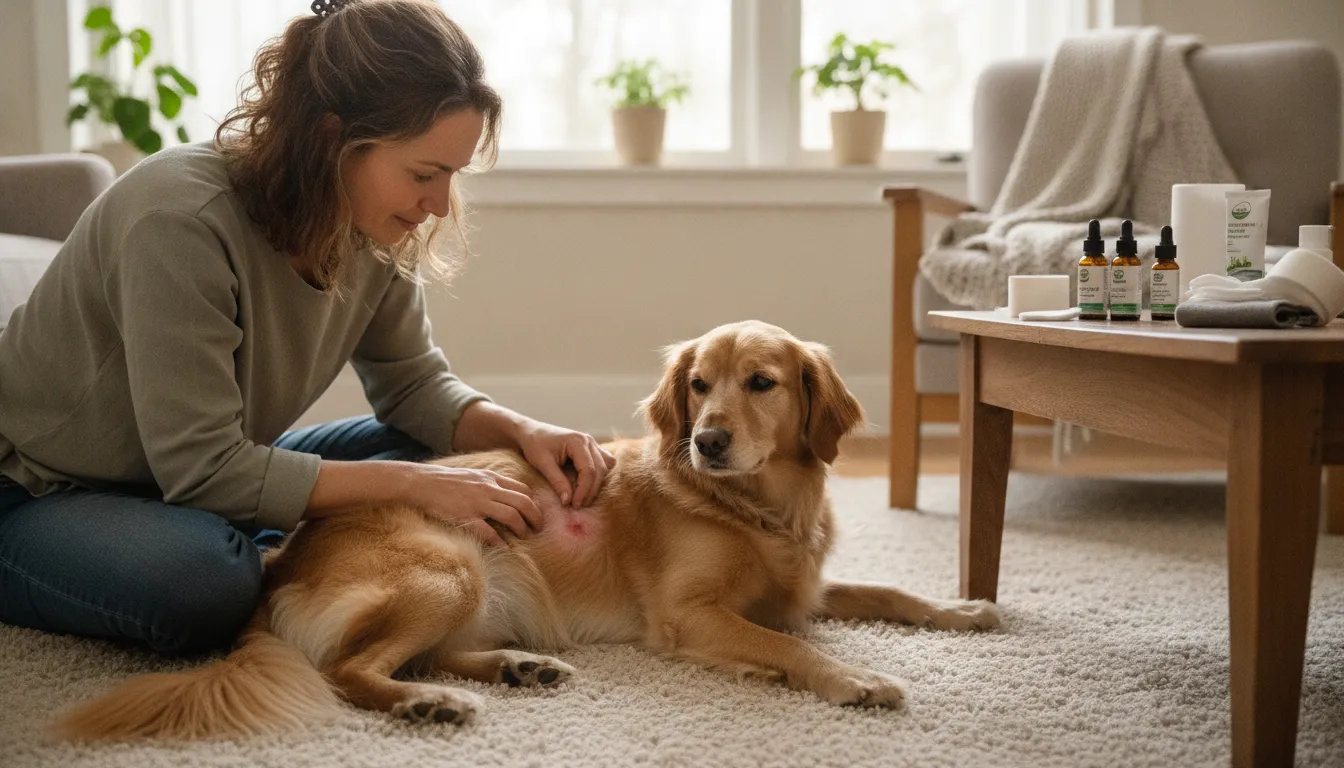
A hot spot is a skin problem known as acute moist dermatitis. It looks like a red, wet, and oozing patch on the skin. These sores get their name from the heat they give off due to swelling. They often happen when a dog licks or bites at one spot. This can start from a bug bite, an allergy, or even a small scratch. Once the skin breaks, germs can grow fast.
Dogs with thick or long coats get these sores more often. Breeds like Golden Retrievers and German Shepherds are common targets. Moisture gets trapped in their fur and keeps the skin wet. This makes it easy for a small itch to turn into a big sore. Learning about managing dermatitis and skin inflammation is a good way to keep your dog at ease all year.
Safe handling for painful skin
Hot spots hurt a lot. Your dog might act in a new way because of the pain. Even a sweet dog can snap or growl if you touch a sore spot. Before you start any care, watch how your pet acts. Gently touch the area near the sore first. If your dog seems tense or pulls away, stop right there. You do not want to risk a bite while trying to help.
Staying calm is your best tool. If you are nervous, your dog will feel it. This can lead to more licking and biting, which makes the sore worse. Dogs are often their own worst foe with these sores. They chew and lick to stop the itch, but that just spreads the germs. Keeping your pet relaxed helps stop this cycle before it gets out of hand.
Red flags that need a vet
Not every hot spot can be fixed at home. Some sores need a doctor and strong drugs. Check the age of the sore first. If the spot is more than one day old, an infection has likely set in. A vet should look at any sore that is older than 24 hours to keep your dog safe. They can give your pet the right help to heal fast.
Watch for signs that the skin is getting worse. Big red flags include deep swelling, lots of green or yellow ooze, and a foul smell. If the area feels hot to the touch, that is also a bad sign. You might also want to look into nutritional support for healthy skin to help prevent future issues. A vet can find the root cause, like a flea bite or an ear infection, so the hot spot does not come back.
- Check for worsening redness or heat.
- Look for yellow or green discharge.
- Call a vet if the sore is older than 24 hours.
- Stop if your dog shows signs of pain or acting out.
How to treat a hot spot on a dog step by step
The safest home-care sequence is simple. Trim hair around the sore, clean gently with a pet-safe product, dry the skin, stop licking, and monitor closely. Call your veterinarian if the area spreads, smells bad, bleeds, or does not improve quickly.
Finding a red, oozing sore on your pet can be scary. These sores are called hot spots. They often start small but can grow very fast. A hot spot is known as acute moist dermatitis, which is a type of skin swelling. The name comes from the heat your dog's body makes as it tries to fight the sore. Dogs with thick or long coats are more likely to get them because moisture gets trapped near the skin.
Dogs are often their own worst enemies when it comes to these sores. When they feel an itch or pain, they lick and bite at the spot. This habit makes the sore bigger and deeper. If you find one, you must act fast. Proper treatment for a hot spot on a dog helps stop the pain and starts the healing steps. Most home care focuses on cleaning the area and keeping it dry. This prevents the sore from spreading to other parts of the body.
Safety and getting ready for care
Before you touch the sore, remember that your dog is in pain. Even the sweetest dog may snap if a sore spot is touched. Gently touch the area and watch how your dog acts. If they pull away or growl, stop and be careful. You may need another person to help hold your dog still. It is also a good idea to have all your tools ready before you start. This makes the work faster and less hard for your pet.
You will need clippers, a mild wash, and clean towels. You should also have a way to stop your dog from licking the spot later. If you are worried about the pain, you can use fast-acting skin irritation sprays to help soothe the skin. These products provide comfort while you work on the deeper issue. Always use tools that are made for pets. Human soaps or drugs can sometimes make the itch worse or even be toxic if licked off.
A simple order for home care
The goal of care is to dry out the sore. Moisture allows germs to grow, which leads to a bad illness. By removing the fur and cleaning the site, you allow air to reach the skin. This airflow is vital for healing. Follow these steps to manage the hot spot at home. If the sore is very large or has been there for more than one day, you should talk to your vet first. Early care is the best way to avoid a long and slow healing time.
- Stop the licking. Put an E-collar or a soft donut collar on your dog right away. This keeps their tongue away from the sore so it can heal.
- Clip the fur. Use electric clippers to trim the hair around the hot spot. This stops hair from getting stuck in the ooze and helps the skin stay dry.
- Clean the area. Use a mild, water-based wash to gently dab the sore. Do not scrub the skin, as this can cause more pain and damage.
- Dry the skin well. Gently pat the area with a clean, dry towel. Air must be able to reach the skin for the swelling to go down.
- Apply topical support. Use a dog-safe spray or gel that is made to help with skin issues. Avoid using human drugs like creams that contain zinc.
- Monitor the healing. Check the spot twice a day for signs that it is getting better. The redness should fade and the oozing should stop within a few days.
When to call your vet
Not every hot spot can be treated at home. If the sore is more than 24 hours old, an illness is likely. In these cases, a trip to the vet is the best choice. Your vet can look for the root cause, such as fleas or allergies. They may also give your dog medicine to stop the itch. Using nutritional support for healthy skin can also help prevent these sores from coming back in the future.
Watch for signs that the sore is getting worse. If you see more swelling, heat, or a bad smell, the spot may have germs. Some dogs also get a fever or stop eating when they have a bad hot spot. If home care does not show results in 24 to 48 hours, seek expert help. A vet can give stronger creams or pills to kill the germs. This ensures your dog gets back to their happy, active self as soon as possible.
Home care vs. vet care for dog hot spots
Home care is best for small, early hot spots when your dog is comfortable and the sore is superficial. Veterinary care is the better choice when infection, severe pain, repeated hot spots, or an underlying allergy may be driving the skin problem.
When to treat at home
You can often care for a hot spot at home if it is small and not deep. Look for sores that are less than one day old and do not seem to hurt too much. The first goal is to stop the itch and keep the area dry. You should trim the hair around the spot so air can reach the skin. This helps the sore dry out and stops hair from sticking to the wet area.
Keeping your dog from licking the sore is the next step. Most dogs will bite a sore until it grows much larger. Use a soft donut collar or a plastic cone to keep them away from the spot. If the sore stays small and starts to scab over, your home care is working well. You may also want to use nutritional support for healthy skin to help stop new spots from forming. Strong skin can help a dog stay healthy even when they have a small itch.
Use mild cleaners to wash the spot twice a day. Do not use harsh soaps that might sting or cause more red skin. If you see the spot shrinking and getting dry, you are on the right path. Most small spots will heal in a few days if they stay clean and dry. Just keep a close eye on the area to make sure it does not start to grow.
| Situation. | Home care may be enough. | Call your vet. |
|---|---|---|
| Size. | Small, new patch. | Large, spreading, or deep sore. |
| Comfort. | Mild itch and normal behavior. | Pain, swelling, odor, or heavy ooze. |
| Location. | Easy-to-reach body area. | Face, ear, genitals, or hard-to-clean folds. |
| Pattern. | First mild hot spot. | Recurring sores or other health concerns. |
Signs your dog needs a vet
Some hot spots move fast and need meds you cannot buy at a store. If a sore is older than one day, a germ infection is likely. Cornell University notes that a vet visit is needed if the sore shows more heat, swelling, or ooze. These signs mean germs may have moved deep into the skin. A vet can test the skin to find the right way to kill the germs.
Seek help if the hot spot is on the face, near the eyes, or by the ears. These spots are tender and can lead to ear issues. You should also call your vet for puppies, old dogs, or pets with other health problems. These dogs may not be able to fight off the skin issues on their own. They need a vet's help to stay safe and heal fast.
Expert care is key for managing dermatitis and skin inflammation that spreads fast. If you see the sore getting bigger even after home care, do not wait. A vet can give pills that work from the inside out to stop the pain. This is often the best way to stop a deep skin issue from getting worse.
What should you avoid putting on a dog's hot spot?
Avoid alcohol, peroxide, harsh soaps, essential oils, and human ointments unless your veterinarian recommends them. These can sting, trap moisture, irritate damaged skin, or make licking more dangerous for your dog.
When you find a red, oozing sore on your dog, your first urge is to help as fast as you can. These sores often show up in just a few hours and look very painful. You might reach for your own first-aid kit to find a quick fix for the treatment for a hot spot on a dog. But you must be careful. The wrong choice can make managing dermatitis and skin inflammation much harder. Hot spots, also known as acute moist dermatitis, need the exact type of care. Using the wrong products can trap moisture, cause more pain, or lead to a deeper infection.
Skip the stinging liquids
It is common to think that a strong cleaner will kill germs and start the healing work. Many people try to use rubbing alcohol or hydrogen peroxide on a dog's skin. You should avoid these for many reasons:
- These liquids sting a great deal when they touch open sores, which can make your dog afraid of being touched.
- Both alcohol and peroxide can damage the healthy cells that are trying to mend the skin.
- This damage slows down the time it takes for the hot spot to close and dry out.
- Using harsh cleaners can lead to more redness and swelling in the area.
While these liquids might be good for a small cut on your own arm, they are too harsh for an open hot spot. You want to keep the skin calm, not hurt it more. If you cause your dog pain, they may try to run away or even nip when you try to help them again.
Be cautious with human drugs
You may also feel like using human creams from your first-aid box. Products like Neosporin or hydrocortisone are common home fixes. While these work well for people, they are often a poor choice for a dog. Dogs have a natural urge to lick anything you put on their skin. Licking and chewing a sore can increase inflammation and spread the sore area, which makes the problem much worse. If your dog eats these human drugs, they could get a very upset stomach. Human creams are often too thick, which stops the air from reaching the sore.
Avoid heavy oils and ointments
The key to fixing a hot spot is to let it dry out. Thick ointments, heavy oils, and some essential oils can act like a seal. They trap heat and moisture against the skin. This creates a perfect place for germs to grow and spread. You should also be wary of products with strong scents. These can hurt the skin and make your dog want to lick the spot. Instead of heavy creams, look for a fast-acting spray that provides fast-acting skin irritation sprays without blocking the air. This helps the spot stay dry while the skin begins to repair itself.
How do you know a dog hot spot is healing?
A healing hot spot usually becomes less red, less wet, less painful, and less itchy. The edges stop spreading, the surface dries, and your dog shows less urgency to lick or chew the area.
Watching a hot spot heal takes time. These sores, also called acute moist dermatitis, can grow fast. But they can also shrink fast with good care. Using fast-acting skin irritation sprays is a common part of treatment for a hot spot on a dog. As the skin heals, you will see the area change from an angry red to a light pink. The best sign is a dry surface. Once the leaking stops and a thin scab forms, you know the body is winning the fight.
Signs of steady healing
You can tell your dog is feeling better by watching how they act. A healing sore will feel less warm to the touch. This happens as the swelling goes down and the skin calms. You should also look for these clear changes:
- The skin turns from bright red to light pink.
- Clear or yellow fluid stops leaking from the sore.
- A firm, dry scab covers the whole area.
- New hair starts to grow back around the edges.
- Your dog stops trying to lick or bite at the spot.
If your pet stays calm when you clean the area, it means the pain is fading. This is a great time to focus on nutritional support for healthy skin to help the coat grow back thick and strong.
Warning signs to watch for
Even with good care, some sores can get worse. You must watch for signs that the redness is spreading or getting deeper. Experts at Cornell University say a sore that stays wet for more than 24 hours is a big concern. Look for these red flags:
- The red area gets larger or new spots appear nearby.
- The skin feels very hot or looks thick and puffed up.
- You see pus that is green or white.
- Your dog growls or snaps when you touch the area.
Acting mean or hiding is often a sign of deep pain. If the sore looks like it is digging into the skin, the infection may be bad. In these cases, home care is not enough.
How to reduce the chance of recurring dog hot spots
Preventing recurring hot spots means reducing moisture, matting, fleas, allergies, and repeated licking triggers. Regular grooming, drying after swimming, parasite control, and ongoing skin support can lower the chance that one irritated patch becomes another hot spot.
Find and manage common triggers
Finding the root cause is the first step in a treating dermatitis and skin inflammation plan. Many dogs get these sores because of pests or allergies. Pests like fleas and ticks are the top cause of skin issues. You should use a good flea control product every month to keep your pet safe. Even one flea bite can start an itch that turns into a big sore. Good pest control is the most needed step to prevent these spots.
Allergies to food or the world around them can also make dogs itch. If your dog licks their paws or belly often, talk to your vet about a treatment for a hot spot on a dog. Problems like full anal glands can also cause a dog to bite their tail area. Check under the tail once a week for signs of redness or licking. Catching these signs early can stop a sore from forming.
Support skin health with supplements
Your dog's skin is their first line of defense. A strong skin barrier can help stop small itches from turning into big sores. Many owners use nutritional support for healthy skin to keep the coat in top shape. These supplements have parts that help the skin stay moist and strong, and we offer a 30-day money-back guarantee. We also offer free shipping on orders over $69.
While a supplement works from the inside, you can also use topical support. Our Hot Spots & More Spray provides fast relief. It is not a cure, but it can help calm the skin when you see the first signs of redness. This helps stop your dog from licking and making the sore worse. A calm dog will heal much faster than one who is always biting at their skin.
Frequently Asked Questions
What are the first steps in treating a hot spot on a dog at home?
Treating a hot spot starts with clearing the area to let skin breathe. You should clip the hair around the sore to stop it from sticking to the ooze. Next, clean the spot with a mild, dog-safe wash. Airflow is vital for drying out the moist skin. According to the Cornell University Riney Canine Health Center, keeping the area dry and clean helps prevent the infection from spreading.
How can I stop my dog from licking their hot spot?
You must block your dog from reaching the sore because licking makes the infection worse. Dogs often bite at itchy skin, which spreads the bacteria. Using a soft donut or a plastic cone is the best way to protect the area. The Cornell Riney Canine Health Center notes that these collars are essential for healing. Without one, your dog will continue to damage the skin and delay recovery.
When should I take my dog to the vet for a hot spot?
You should see a vet if the sore does not show signs of healing within a day. If the spot is very large, deep, or oozing thick fluid, home care may not be enough. Severe pain or signs of fever also need professional help. Experts at Cornell University state that if a hot spot is older than 24 hours, an infection is likely and needs a doctor.
Can I use human medication on a dog's hot spot?
It is best to avoid human creams like Neosporin on a dog. These products can trap moisture in the wound or cause more irritation. Some dogs may also lick the cream off, which can lead to stomach upset. You should only use washes or sprays made for pets. Clean, dry skin is more important than using heavy ointments. Air needs to reach the skin for it to heal well.
How can I prevent recurring hot spots on my dog?
Prevention focuses on keeping your dog dry and managing skin health. Regular grooming helps prevent matted hair that traps moisture. You should also use steady flea control to stop the itch-scratch cycle. Adding quality skin and coat support can help maintain a strong skin barrier. According to Hot Spots & More Spray for Dogs, using science-backed supplements may help skin health and keep your dog comfortable and happy through the year.
Ready to help your dog find relief from hot spots?
Hot spots can spread quickly, but careful cleaning, licking prevention, and the right dog-safe skin support can help you respond with confidence. Summit Animal Health's Hot Spots & More Spray for Dogs is designed for pet owners who want targeted support without harsh, improvised products.
Shop Hot Spots & More Spray for Dogs to support calmer, cleaner skin today.

